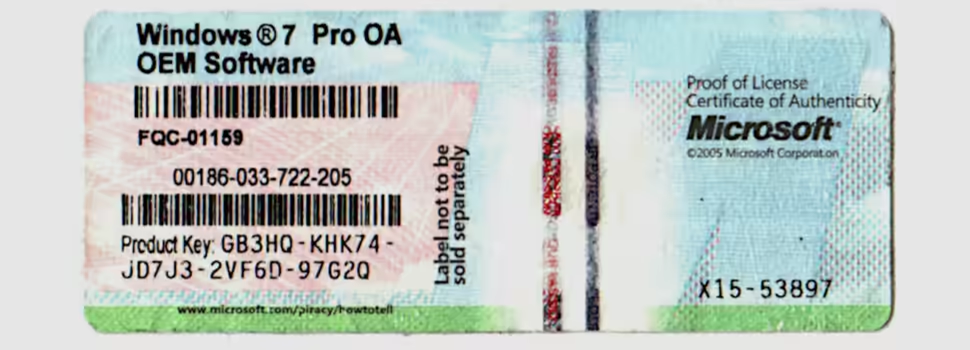
How Windows 7 Pro Product Keys Are Generated
Windows 7 pro product keys, like other Microsoft product keys, are generated using algorithms designed to produce a unique, valid key for each licensed copy of the software. The algorithms are proprietary and not publicly disclosed, but we can discuss some of the general principles behind how such systems work. Let’s break down the process into key concepts:
1. Key Generation Algorithms
At the core of generating a valid product key is the use of a cryptographic algorithm. While the exact details of Microsoft’s algorithms are not publicly available, here's a general approach to how these algorithms typically work:
- Modular Arithmetic and Checksums: One method is to use a large prime number-based algorithm (e.g., RSA) to generate a sequence of alphanumeric characters. These sequences are processed through modular arithmetic to ensure that they follow certain patterns or rules that can be verified later when the key is entered for activation. The last characters in the key sequence often act as a checksum that allows the validation algorithm to quickly check if a key is structurally valid before deeper verification with Microsoft's servers.
- Pseudorandom Number Generation (PRNG): Microsoft’s algorithms likely use pseudorandom number generation, where a “seed” value (a starting input) generates a seemingly random sequence of numbers that fits a specific format. The seed is often based on a combination of factors like the product version, distribution method (OEM vs. retail), and region.
- Predefined Rules and Character Sets: Windows product keys use only specific characters to avoid confusion. The algorithm ensures that the keys avoid letters like "O" and "I" (which can be confused with "0" and "1") and generates a key that complies with Microsoft's format (25 characters, alphanumeric).
Typical Keys
Windows 7 Professional
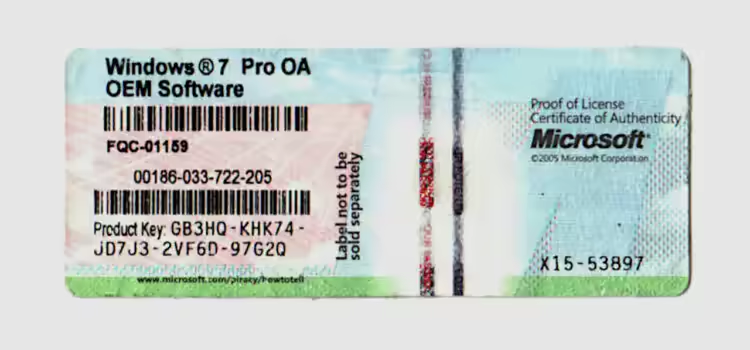
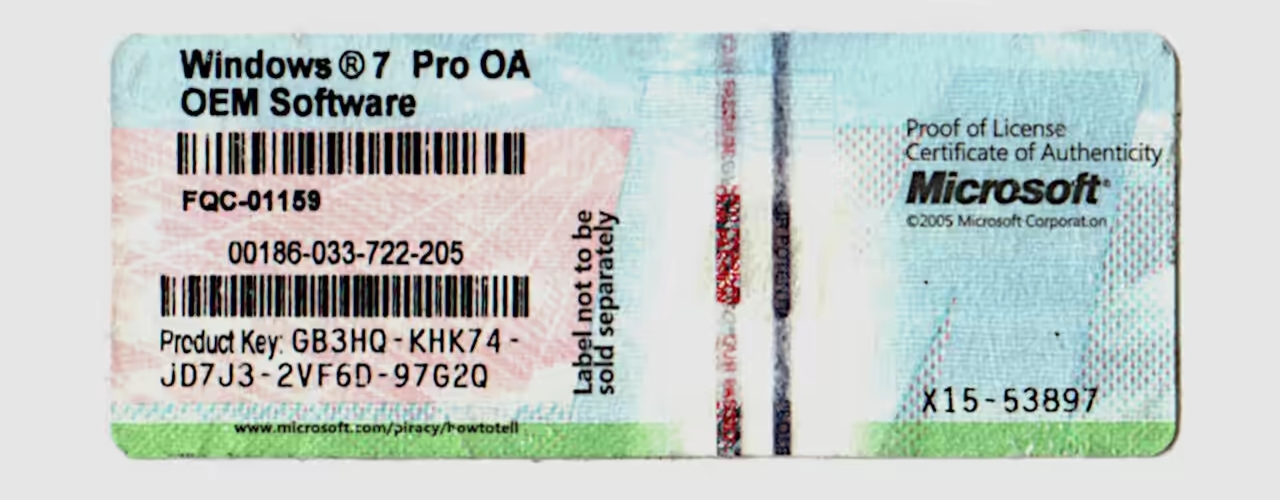
OEM: GB3HQ-KHK74-JD7J3-2VF6D-9762Q
OEM: CVTRK-76M8B-JKJYR-YFYX6-3PJWT
OEM: 6BJ9W-GPM42-DHGRW-BPJ2W-DYY7P
2. Different Types of Windows Keys and Their Algorithms
While the core algorithm for generating Windows product keys may be similar across various types of keys, the key type (retail, OEM, or volume license) determines some of the parameters for how the key is generated and how it is validated.
Here’s how each key type works and how it differs:
Retail Keys
- Activation Scope: Retail keys are sold directly to consumers and are used to activate a single installation of Windows on one machine. If the user wants to transfer the operating system to another computer, they can usually deactivate the old installation and reuse the same key, subject to Microsoft's licensing terms.
- Validation: When a retail key is entered during installation or activation, the key is checked against Microsoft’s activation servers to verify its validity. Microsoft tracks the number of activations per key, ensuring that the same key isn’t used on more than one active system at a time.
- Generation Rules: Retail keys are more "flexible" in terms of activation. Microsoft’s algorithm for retail keys allows them to be activated multiple times (though not concurrently), with a certain number of reactivations permitted for hardware changes.
OEM Keys (Original Equipment Manufacturer)
- Tied to Hardware: OEM keys are pre-installed on systems by manufacturers (e.g., Dell, HP, Lenovo) and are typically “locked” to the hardware they’re initially installed on. This means that if you replace the motherboard or make significant hardware changes, the OEM key might not work anymore.
- Activation Process: OEM keys often use SLP (System Locked Pre-installation), which bypasses the need to activate online with Microsoft servers as long as the key is used on the original system. The key is embedded in the system's BIOS/UEFI, and the OS checks this to verify the license.
- Key Generation Rules: The generation algorithm for OEM keys likely includes unique data based on the manufacturer, the model of the system, and the hardware configuration. This makes the key unique to the machine, and the OEM version of Windows comes with a special activation method that checks against the machine’s hardware.
Volume License Keys (VLK)
- Multiple Activations: Volume license keys (VLKs) are used by businesses, institutions, and organizations that need to activate multiple copies of Windows on a large number of machines. A single VLK can be used to activate hundreds or even thousands of systems, depending on the agreement with Microsoft.
- Activation Methods:
- KMS (Key Management Service): Large organizations often use a local KMS server. KMS requires systems to “check in” with the KMS server to activate and remain activated. These keys activate systems for 180 days at a time, and the systems need to periodically reconnect to the KMS server to remain active.
- MAK (Multiple Activation Key): An alternative to KMS, MAK keys are used for one-time activations, where each system independently activates online with Microsoft. Once activated, a system does not need to connect to a local KMS server.
- Key Generation: The VLK generation algorithm differs because it allows for a much larger pool of activations, with Microsoft’s servers handling tracking. The keys must allow multiple concurrent activations, which means the algorithm assigns a higher limit for permissible activations.
How VLK Keys Differ from OEM Keys
- Scope of Use:
- VLK Keys: Designed for multiple activations across many devices, usually in a business environment. A single VLK can activate numerous machines, making it ideal for corporate environments where deploying identical software across many systems is necessary.
- OEM Keys: Intended for one-time use on a single system. Once installed, an OEM key is generally tied to the hardware of that system and can’t be transferred to another machine. OEM licenses are often less expensive than retail or volume licenses because they are non-transferable.
- Activation Methods:
- VLK: As mentioned, VLKs can be activated using KMS or MAK, with KMS offering the advantage of managing activations within an organization without requiring each machine to independently connect to Microsoft's servers. This can be especially useful for large-scale deployments.
- OEM: Activation for OEM keys is usually automatic and hardware-locked, meaning there’s no need to connect to Microsoft's activation servers as long as the key is used on the original hardware. The OS verifies the license by checking a unique identifier embedded in the BIOS or UEFI of the machine.
- Hardware Changes:
- VLK: These keys are not tied to specific hardware. The systems using VLKs can be re-imaged or have components upgraded without affecting the key’s validity, as long as the maximum number of activations has not been exceeded.
- OEM: These keys are tied to the original hardware configuration. Significant hardware changes (especially the motherboard) usually invalidate the OEM key, requiring the user to purchase a new license if they want to continue using Windows on the new setup.
- Cost and Licensing Flexibility:
- VLK: Volume licenses are typically cheaper per installation than retail or OEM licenses due to the bulk nature of the purchase, making them ideal for large organizations. They also offer more flexibility in terms of transferring licenses across machines.
- OEM: These licenses are cheaper upfront but are less flexible since they are tied to the hardware and can’t be transferred. OEM licenses are generally used by PC manufacturers to install new machines.
Conclusion
The algorithms used to generate Windows 7 product keys are designed to be both unique and difficult to guess, using techniques like cryptography and pseudorandom number generation. The types of keys—retail, OEM, and volume license—are generated and managed differently based on their intended use cases.
- Retail keys allow for flexibility and can be transferred to different machines.
- OEM keys are tied to specific hardware and are generally non-transferable.
- VLKs are designed for enterprise environments, where multiple systems need activation using the same key, with different methods like KMS or MAK to manage activations.
Understanding these differences helps explain why each key type has its limitations and benefits depending on the licensing agreement and the context of use.

Genie
I search for the answers that the big search engine won't answer.